COVID early super release did little for financial, emotional wellbeing.
The Early Release of Super scheme implemented during the COVID-19 pandemic had little impact on financial resilience or wellbeing, new research has shown.
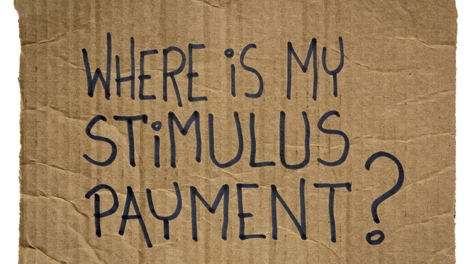
The e61 Institute analysis was submitted to the Commonwealth government COVID-19 response inquiry and analysed the Household, Income and Labour Dynamics in Australia (HILDA) Survey to assess the wellbeing impact of the financial support measures the government implemented during that period.
It found that overall, boosting income support during the pandemic was highly effective at stimulating spending, reducing financial stress, and improving wellbeing, but the early release of super was not as effective in achieving all three goals.
The analysis of bank transaction data shows people who received the one-off $750 Economic Support Payment (ESP) and the $550 per fortnight JobSeeker Payment Coronavirus Supplement (JSP) spent their relief payments quickly and mostly on essentials such as groceries.
ESP recipients spent 70 per cent of the payment, and JSP recipients spent 58 per cent of the extra support over their first fortnight.
Meanwhile, people who participated in the Early Release of Super (ERS) scheme spent 31 per cent of the money they withdrew over the first two weeks.
Wellbeing temporarily improved for JSP recipients while the supplement was in place, but the ERS scheme – despite being intended to target those in ”financial stress” – did not lead to improvements in financial resilience or wellbeing.
“Our research suggests that in terms of stimulating spending and improving wellbeing, the JobSeeker supplement was the most effective economic support payment deployed during the COVID-19 pandemic,” said e61 research director Dr Gianni La Cava.
“Recipients spent the JSP Supplement and ESP quickly, with 20–25 per cent of each payment spent on the day it was received, while the ERS was spent more gradually over the first fortnight.”
La Cava added that, notably, ERS had the biggest impact on aggregate spending because it was of larger value, on average.
“The fact the JSP was the only payment to significantly improve recipients’ wellbeing may be because it made up 25 per cent of income for its recipients, compared with 19 per cent for the early super release – suggesting it was better targeted at people on lower incomes,” he said.
“The limited impact of the early super release scheme on financial resilience or wellbeing suggests it was too broad. If policymakers want to stimulate spending, reduce financial stress and improve wellbeing during future economic downturns, targeted boosts to income support programs should be part of their toolkit.”
Between April and June 2020, e61 estimates that about 4.9 million people received the $750 ESP, while 2.5 million received the $550 per fortnight JobSeeker supplement and 2.4 million applied for early super release with an average of $8,223 withdrawn.
The super release scheme – which allowed withdrawals up to $10,000 – created an estimated $6.3 billion of extra spending between April and June 2020, compared with $2.7 billion for the economic support payment and $4.2 billion for the JobSeeker coronavirus supplement.
By Keeli Cambourne
August 27 2024
smsfadviser.com
More Articles

Complex rules of small business CGT concessions can present challenges
The complex rules around small business capital gains tax concessions can eliminate tax on a business sale and...

IGR predicts drawdowns will be major source of retirement income
Drawdowns from superannuation are projected to increase to almost six per cent of gross domestic product (GDP...

Retirees hardest hit by inflation
Retirees are being hit harder by rising prices than the general population, with the costs that dominate their...

The retirement gap we don’t talk about
Retirement confidence isn’t just about your nest egg, it’s about your plan. Retirement...

The three phases of retirement: Key decisions at every stage
Retirement starts long before your last day at work. Retirement starts long before your last day at...

Children as SMSF dependents very complex
The definition of children as dependants under superannuation law is not straightforward when dealing with...

Two Cautionary Tales About Resources Important to Anyone Using a Domain Name or Website
This warning is new, but the reason for forgetting to renew a domain name isn’t. 1. Not renewing...

Check out the smartest species on earth: Data from 200M BC to 2026
Check out the evolution of animal intelligence from the Jurassic Period (~200 million years ago) to 2026...
Heathmont Financial Services Pty Ltd (ABN 68 106 250 104) trading as Heathmont Financial Services is a Corporate Authorised Representative (No. 262098) of Knox Wealth Management Pty Ltd (ABN 74 630 256 227), Australian Financial Services Licence Number (AFSL) 513763.
Julian McGoldrick is an Authorised Representative (No. 262098) of Knox Wealth Management Pty Ltd AFSL 513763.